Obesity is one of the nation’s defining public health challenges. Despite decades of public health efforts, more than 40% of American adults have obesity, which raises the risk of more than 200 chronic conditions, kills 300,000 Americans annually and imposes a staggering economic burden.
For over 20 years, Schaeffer researchers have advanced understanding of obesity’s root causes, its economic toll and the value of interventions aimed at addressing the disease. The recent introduction of highly effective anti-obesity medications known as GLP-1s offers a potent breakthrough in the fight against obesity and chronic disease. However, access to the treatments has been limited, largely because of concerns about costs and Medicare’s longstanding prohibition on covering weight-loss drugs. Access continues to be limited but direct-to-consumer and cash options have allowed some to obtain these drugs through non-traditional avenues.
These transformative treatments have captured the public’s attention and prompted policymakers to confront the demand for access. Schaeffer research has provided urgently needed evidence about cost, coverage and value of anti-obesity medication. These findings have informed media coverage and helped shape the national conversation around treatment for this disease. Schaeffer scholars have also been a frequent resource for the White House and Congress as policymakers considered sustainable options for expanding access.
The White House in November 2025 announced a historic agreement for Medicare to begin covering GLP-1s at reduced prices for certain beneficiaries, with discounts also available for Medicaid and self-pay patients. The Trump Administration’s projection of Medicare savings resulting from healthier patients closely aligned with findings by Schaeffer research.

The Schaeffer policy impact cycle follows four pathways for driving meaningful change: identifying the problem, shaping the debate, designing policy solutions and evaluating outcomes. Through this process, Schaeffer develops research with impact.
Identifying the problem
Schaeffer scholars played an early leading role in examining the drivers of obesity and revealing its profound health and economic consequences.
Long before obesity rose to the forefront of public health debates, a landmark 2004 Health Affairs study from Schaeffer scholars identified that obesity was linked to increased disability among younger adults, mostly due to musculoskeletal issues and diabetes. The study from Founding Director Dana Goldman and Chief Scientific Officer Darius Lakdawalla was initially met with skepticism—disability rates among older Americans had been declining—but is now regarded as foundational. Lakdawalla’s pioneering research also showed how technological advancements were contributing to the dramatic growth in obesity, as food became cheaper and easier to produce and physical labor was replaced with more sedentary work.
The findings were an early indication of how growing disability among young adults could have damaging effects on public health insurance programs and the economy. Goldman and Lakdawalla in a 2005 Health Affairs article projected that obesity would cost Medicare more than any other disease. Their subsequent research showed that obesity represented the largest immediate risk to public finances, underscoring the profound need for effective weight-loss interventions.
Driven by Schaeffer’s mission to identify actionable policy solutions, scholars used a microsimulation model to analyze a range of measures, from behavioral nudges to bariatric surgery and sugar taxes. Research led by Lakdawalla and Byran Tysinger, director of health policy simulation, showed limited population-wide effectiveness; for instance, while bariatric surgery can be transformative for individuals, its invasive nature prevents broader uptake.
“I’ve been modeling obesity interventions for most of my career, looking at various interventions and public policies,” Tysinger said. “Modest effects — 1% to 2% percent weight loss — were the norm, and 5% was considered incredibly optimistic.”
Goldman also emphasized the need for a sweeping, evidence-based public health campaign to combat obesity on the scale of the historic effort to stamp out tobacco use. Such an effort would include public awareness efforts to get people moving, investments in new treatment science, policies rewarding behavior change and broader access to effective therapies.
“Smart, bold strategies helped us address public health crises before, including smoking and hypertension,” Goldman wrote in The Conversation. “We need to be similarly aggressive with obesity if we want to avert hundreds of thousands of unnecessary deaths.”
The Benefits of New Treatments
GLP-1s were initially developed to treat Type 2 diabetes but were later approved for obesity when they were found to produce substantial weight loss. These new treatments, first available as injectables, can help people reduce 15% of their body weight or more, offering a powerful opportunity to reverse the trajectory of the obesity crisis. However, just a fraction of those clinically eligible initially had access because of Medicare’s coverage prohibition and the refusal of most private insurers to cover them.

Schaeffer research was among the first studies to demonstrate the potential cost savings and societal benefits from allowing Medicare to cover treatments for weight loss. An influential April 2023 white paper by Schaeffer Scholar Alison Sexton Ward, Tysinger, Research Programmer PhuongGiang Nguyen, Goldman and Lakdawalla estimated coverage would generate at least $175 billion in cost offsets to Medicare in just the first 10 years as demand for other healthcare services was reduced. Savings for taxpayers would be even larger if private insurers, who often follow Medicare’s lead, also expanded coverage. Society could reap as much as $1 trillion of social benefit through reduced healthcare spending and quality of life improvements resulting from less disability and pain.
Shaping the Debate
Since the white paper’s publication, Schaeffer scholars have frequently been sought out by news outlets for their insights on the value of obesity treatments. Their work has garnered more than 1,000 media mentions, and scholars articulated the benefits of expanded access through op-eds in prominent publications including the Washington Post, the Wall Street Journal and STAT News. The 2023 white paper was also frequently cited in op-eds supporting Medicare coverage.
The findings also had an immediate impact in Washington, DC. Informed by Schaeffer research, U.S. House Reps. Brad Wenstrup (R-Ohio) and Raul Ruiz (D-Calif.) reintroduced legislation to allow Medicare coverage of weight-loss treatments. Later versions of the bill would offer more limited coverage amid concerns over immediate costs.
As policymakers examined coverage options, Schaeffer scholars had dozens of private interactions with Capitol Hill offices, agency leaders and White House officials. They also advised the Congressional Budget Office on how to model the budgetary impacts of broader coverage.
In Washington, scholars also publicly made the case for expanded coverage. Senior Scholar Anne Peters, an endocrinologist who works in both affluent and underserved communities, in testimony before the U.S. House Ways and Means Health Subcommittee told lawmakers about how obesity is driving widening disparities in chronic disease among her patients.

In an op-ed for the Los Angeles Times after the hearing, Peters wrote that GLP-1s represented a weight-loss remedy that works for all her patients when other interventions have fallen short.
“Of course we also need to keep pressing for better, broader fresh food access, healthier diets and safe places to exercise around the clinic where I work in East L.A,” Peters wrote. “However, use of these newer medications in any part of town can provide true benefit even if lifestyle changes are harder to implement.”
Designing Policy Solutions
Schaeffer scholars continued to examine the value of GLP-1s and pathways to expanding access without undermining incentives for continued development of weight-loss treatments.
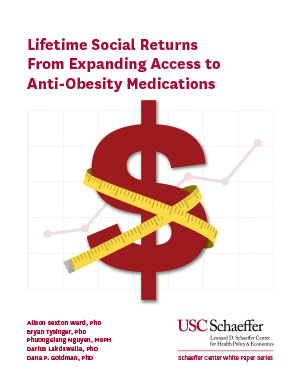
In a second white paper published in March 2025, scholars found broad access to GLP-1s would generate annual returns to society of more than 13%, nearly double the rate of the U.S. stock market returns this century. While all age groups would enjoy longer and healthier lives, younger and healthier adults would see the biggest gains, underscoring the value of these treatments as a powerful prevention tool. As Goldman told STAT, the findings indicated that expanded access to obesity medications is “probably the single most effective policy for improving public health.”
The remarkable benefits of GLP-1s and steep price tags have sparked a fierce debate over how to sustainably expand access to those who need treatment now. While some critics pushed for government price controls, Schaeffer scholars argued that market competition was already reducing costs of the treatments—and that growing competition would continue to lower prices further.
“Price controls can work in the short run to help affordability. But in the long run, they suppress innovation and cost lives,” Goldman and Ward wrote in STAT. Instead, they argued that the extraordinary demand for GLP-1s offered an opportunity to align pricing with value.
As the Trump Administration considered coverage options, Goldman and Ward calculated that the net prices of GLP-1s, after rebates and discounts, were already well below the value they provide. Even so, many insurers and state governments remained reluctant to cover the treatments because of their large upfront costs and uncertainty over whether they would ultimately capture the long-term savings from healthier patients.
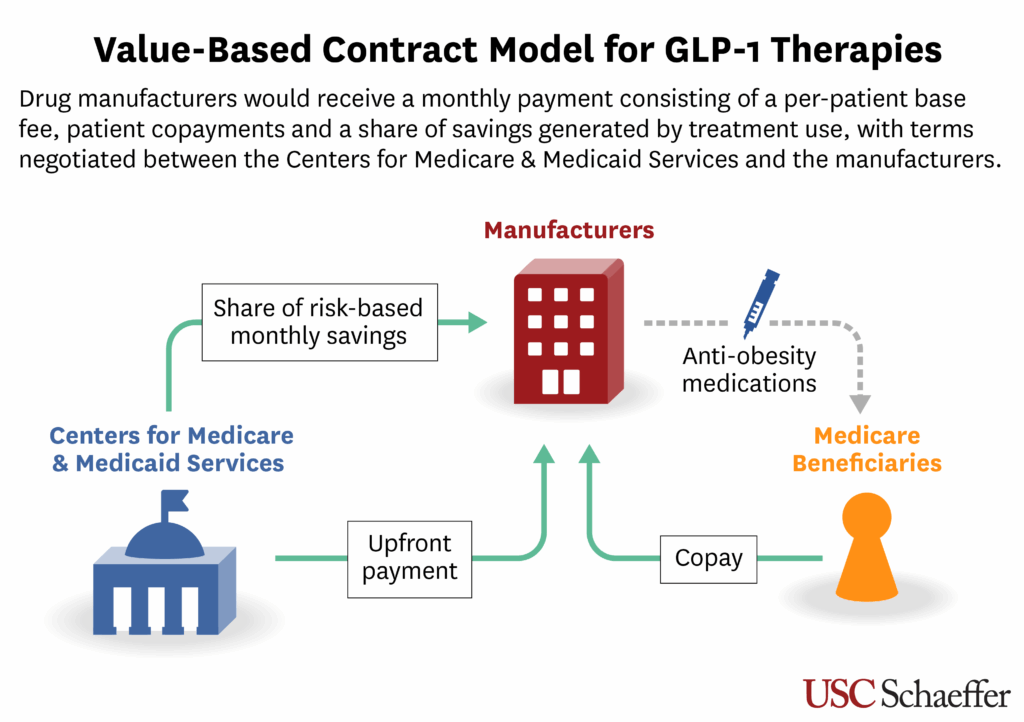
To address these concerns, Ward, Schaeffer Center Co-Director Erin Trish, Goldman and Lakdawalla designed a value-based pricing model to offer obesity treatments to Medicare beneficiaries. Under this approach, traditional Medicare would pay lower upfront prices to manufacturers while later sharing savings as patients avoid developing obesity-related conditions. A hypothetical contract with evenly shared savings illustrates the appeal of this approach: In year 10 of the contract, annual Medicare spending would be reduced by $24 billion, while manufacturers would receive $12 billion in bonuses.
Evaluating Outcomes
Potentially millions of patients will soon have access to GLP-1 under the Trump Administration’s initiatives. However, there are remaining questions about how to extend treatment to all who would benefit without straining budgets. Furthermore, real-world evidence continues to accumulate about the benefits of these treatments. Schaeffer’s ongoing work on innovative drug pricing models could inform how policymakers navigate these challenges.
New generations of anti-obesity medications are expected to come to market in the coming years. The first GLP-1 pills, which may be appealing to a broader set of patients, have already arrived. Value-based pricing strategies that align all parties around a shared goal of lasting health improvements can expand access, manage costs and drive further innovation in this critical area of medicine.