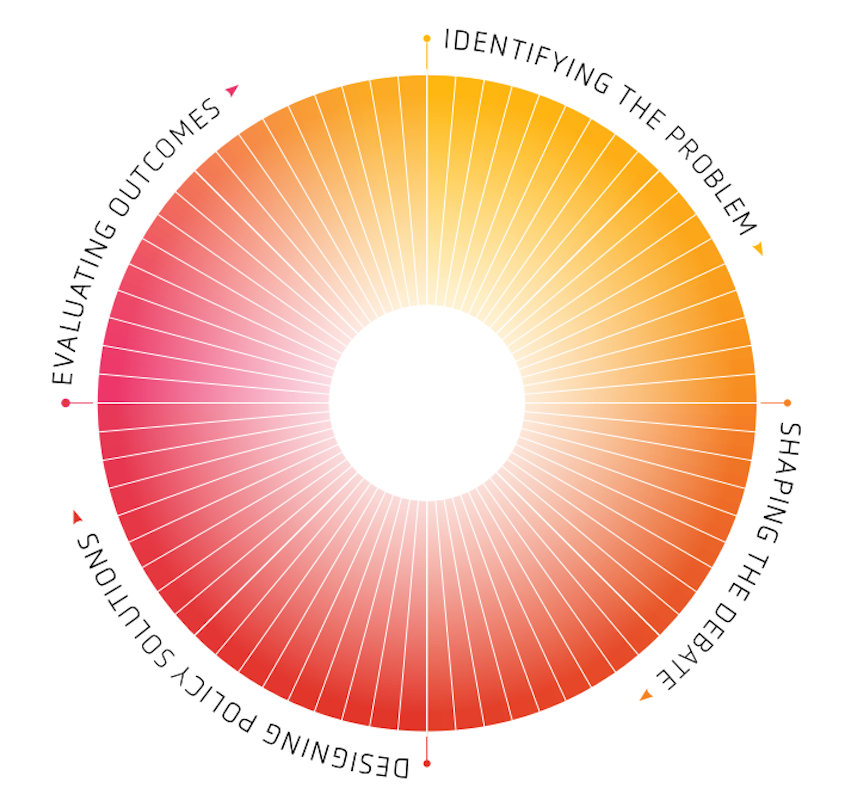
Policy Impact Cycle
The Schaeffer Institute policy impact cycle illustrates four pathways that are leveraged to inform action: identifying the problem, shaping the debate, designing policy solutions and evaluating outcomes.
Unlike traditional academic models that stop at publication, Schaeffer embeds translation, dissemination and evaluation into every phase of this work. By integrating rigorous research with direct policy engagement, the Institute moves ideas into action.
Identifying the problem
The Institute focuses on the issues that most affect lives, markets and democratic institutions. Using the toolkits of social scientists, Schaeffer scholars quantify trade-offs, detect system failures and assess whether societal needs are appropriately met.
Shaping the debate
Schaeffer translates academic research into clear insights. Through direct engagement with policymakers, media and stakeholders, the Institute elevates public discourse and ensures that debates are grounded in evidence-based research.
Designing policy solutions
Schaeffer scholars develop policy frameworks grounded in economic and social science and informed by engagement across the public and private sectors. This work equips decision makers with rigorously tested solutions that improve health and wellbeing.
Evaluating outcomes
Analysis does not end with adoption. Schaeffer researchers measure outcomes, assess costs and benefits, and identify unintended consequences—ensuring policies evolve based on evidence and deliver lasting public value.
Below are case studies that exemplify the impact the Schaeffer Center has had in key policy areas.
Case Studies View All
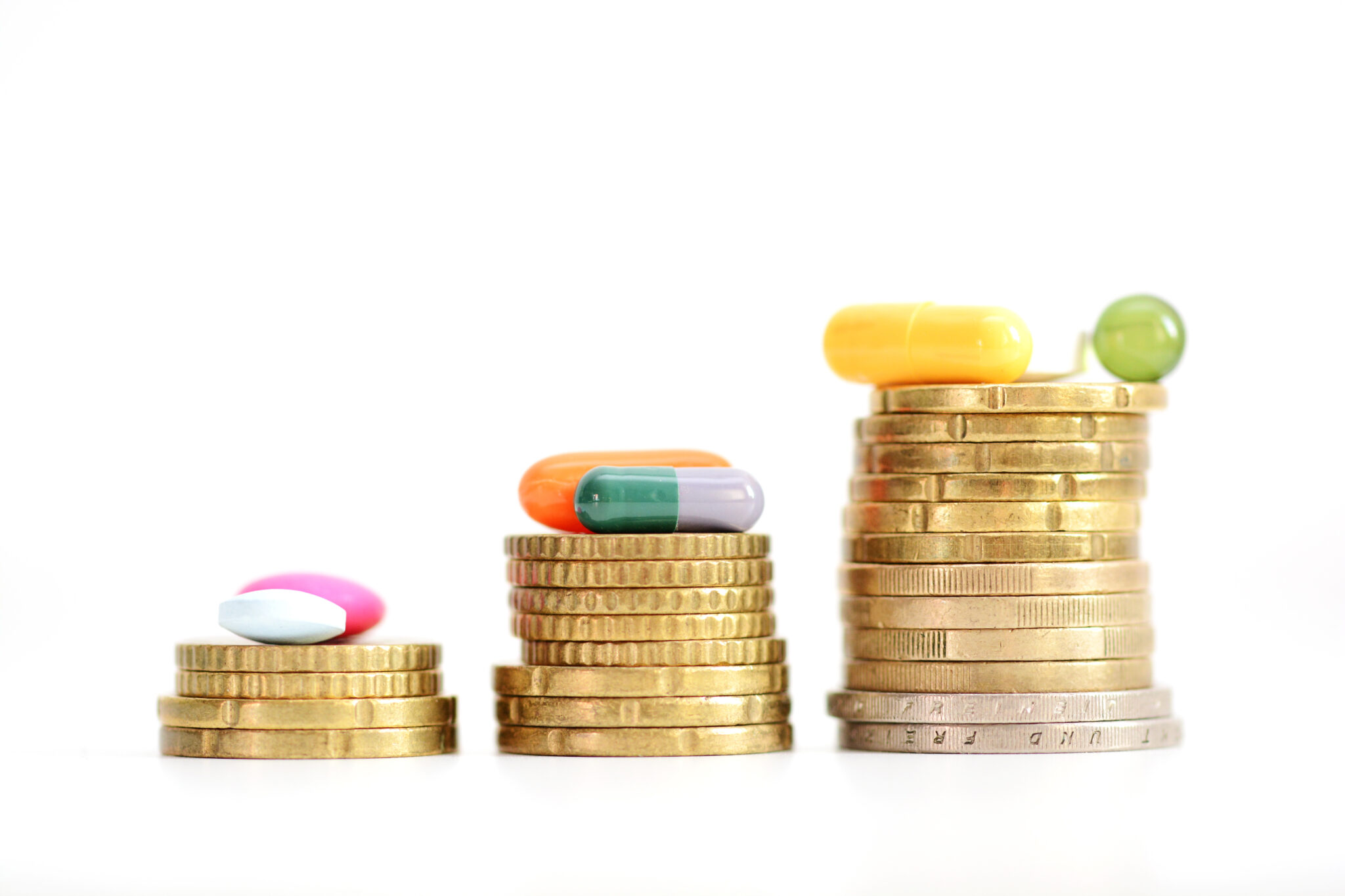
Schaeffer Solutions: Developing Innovative Payment Models for Prescription Drugs
Impact View All
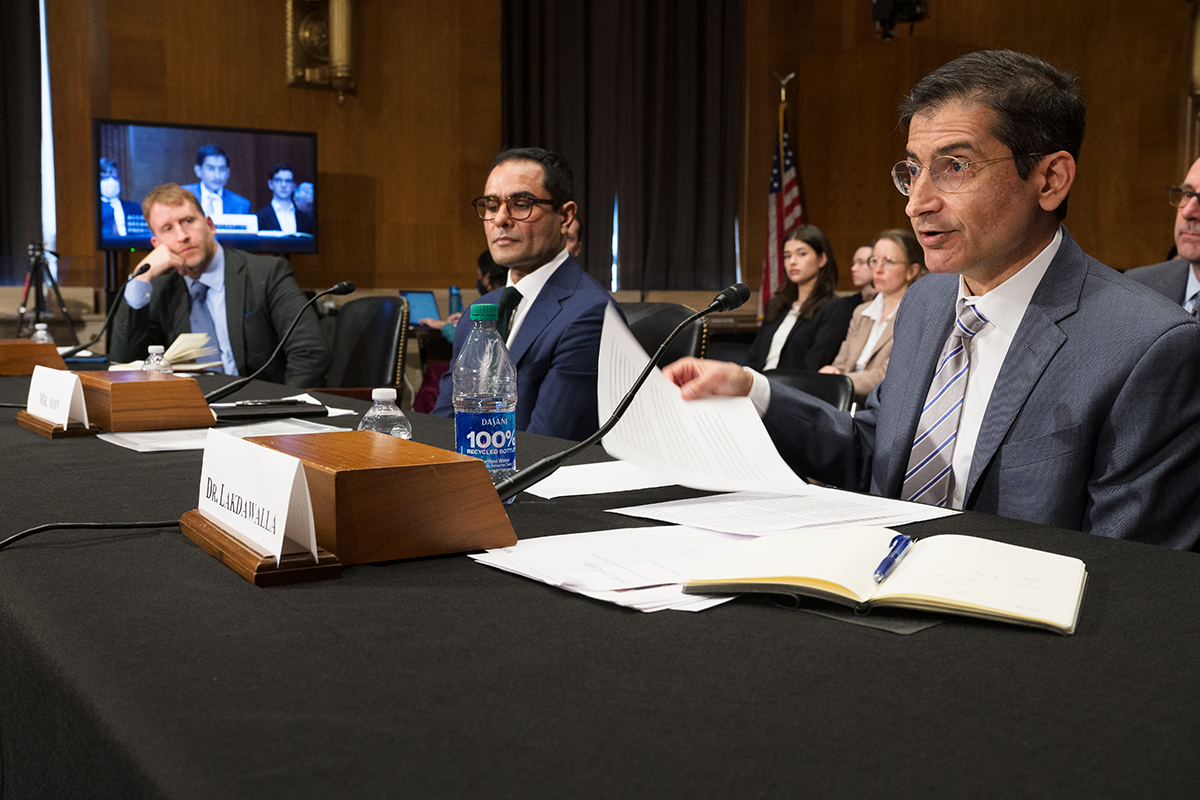
Schaeffer Center Researchers Make an Impact in Washington
Experts: Darius Lakdawalla, Erin Trish, Karen Van Nuys, Neeraj Sood, Alice Chen